
Drainage
DRAINAGE IN Piedmont, Berkeley, and Oakland, CA.
Water always wins an argument with concrete, so we never let one start. Paradigm Concrete & Construction Inc installs drainage in Piedmont, Berkeley, and Oakland, CA, Contra Costa County, and Alameda County, mapping out where water collects, trenching to a consistent slope, and discharging somewhere legal and lower. With 60+ years of combined experience, describe the wet area through our own contact page.
EVERY CONCRETE FAILURE STARTS AS A WATER PROBLEM.
Undermined driveways, heaved sidewalks, leaning walls, damp crawl spaces, cracked stem walls. Trace any of them back far enough and the cause is water going somewhere it should not have gone. Fixing the concrete without fixing the water simply schedules a repeat, which is why we look at drainage before quoting almost any repair.
Solving it is rarely dramatic. Most properties simply need slope corrected, downspouts extended, and a clear route created for subsurface water to leave. Done properly, the whole system becomes invisible and stops being your problem entirely.
✓ Site walked during or after rain wherever possible
✓ Discharge point identified before any trenching starts
✓ Perforated pipe bedded in gravel and filter fabric
✓ Surface grading corrected alongside buried drainage
DRAINAGE SYSTEMS
MOVE THE WATER, AND THE OTHER PROBLEMS GO QUIET.
Homeowners often call about a symptom rather than a cause. The garage floods, the side yard stays soft into May, moss grows where grass used to, a crack in the slab weeps after storms. These look like separate complaints, and they are almost always one drainage issue expressing itself in four different places on the property. Finding the cause takes longer than treating a symptom, and it is the only version that lasts.
DELTA CLAY DOES NOT ABSORB WHAT YOU GIVE IT.
Antioch soil sheds water slowly because dense clay has very little infiltration capacity. Rain that would soak away on sandy ground instead runs across the surface or sits in any low point it finds. That behavior makes grading and positive discharge far more important here than in regions with freely draining soil, and it is why undersized systems back up during the first real storm.
WATER TAUGHT US MORE THAN ANY CLASSROOM COULD.
You learn drainage by returning to properties after a storm and seeing exactly what your system did. That feedback loop, repeated across residential and commercial sites for 60+ years of combined crew experience, is how we know which solutions hold and which look good on paper. We would rather size a system generously now than explain a backup later. Want us to look at your yard after the next rain?
WHAT A WORKING DRAINAGE SYSTEM DELIVERS
A YARD YOU CAN ACTUALLY USE
Standing water turns a lawn into a place nobody walks for months. Moving that water off keeps grass alive, keeps mosquitoes down, and returns a section of the property to the use it was intended for.
FOUNDATIONS THAT STAY DRY
Water pooling against a stem wall or slab edge finds its way into the structure eventually. Directing it away removes the driving force behind damp crawl spaces, efflorescence on foundation walls, and the slow undermining of footings.
CONCRETE THAT LASTS ITS FULL LIFE
Saturated base material loses its bearing capacity, and slabs above it settle and crack. Keeping water out of the subgrade preserves the compaction we worked to achieve and protects every dollar spent on the flatwork above.
NO MORE FLOODED GARAGES
A garage sitting slightly below grade collects whatever the driveway sends toward it. A channel drain across the opening, combined with corrected pitch, ends that recurring cleanup and the damage it does to anything stored inside.
PROTECTION FOR YOUR LANDSCAPING
Roots drown in saturated soil just as surely as they die in drought conditions. Balanced drainage keeps beds and lawns in the moisture range plants actually want, protecting an investment that took years to establish properly.
FEWER ARGUMENTS WITH THE NEIGHBORS
Runoff crossing a property line creates a problem that is legal as much as practical. A designed system that discharges to an appropriate point keeps water on your side of the fence and conversations friendly.

WHAT WE INSTALL
OUR DRAINAGE WORK
Surface water and subsurface water need different tools, and most properties need a combination. These six systems cover nearly every situation we are called out to assess and correct across the East Bay.
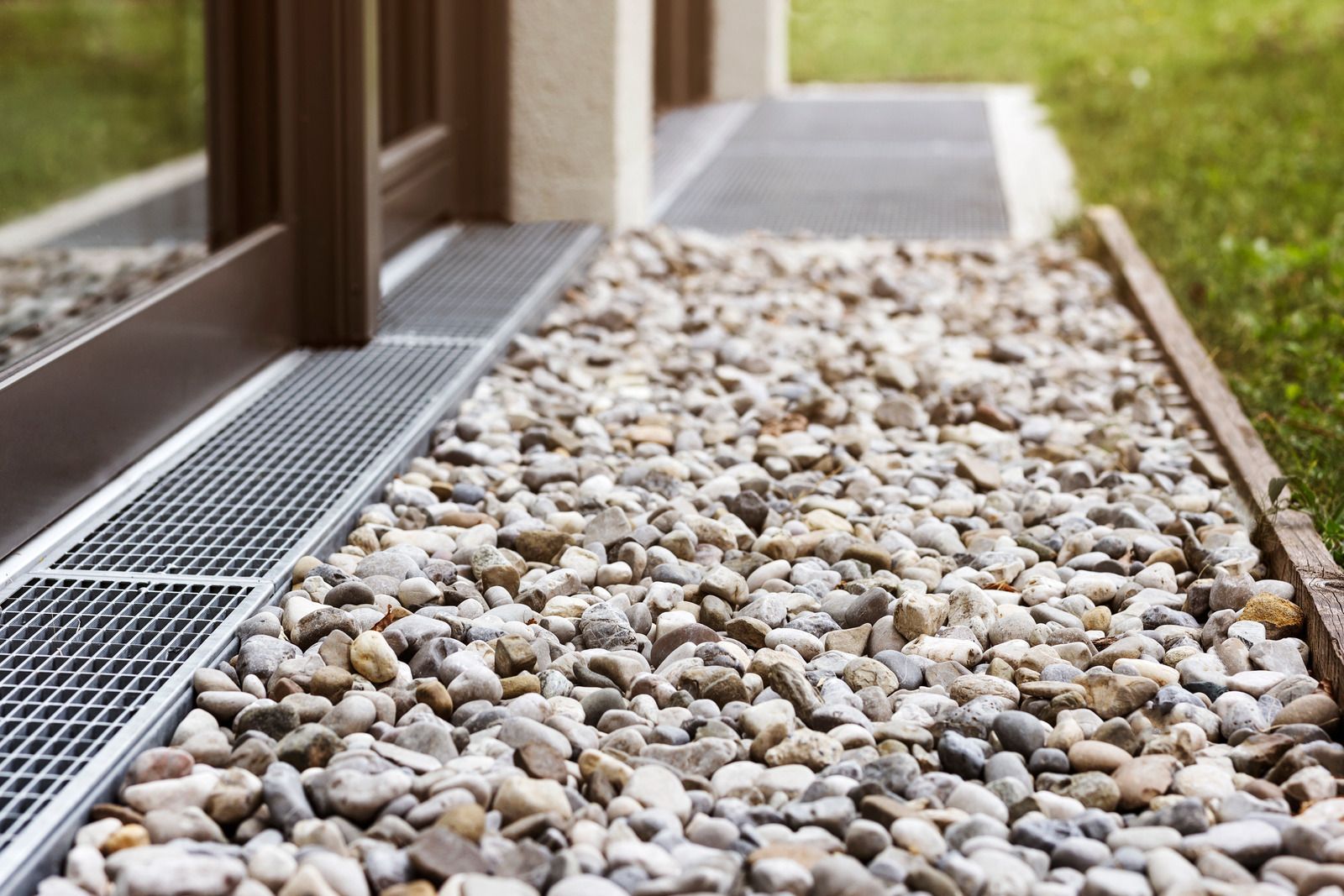
BURIED LINE
French Drains
A perforated pipe bedded in drain rock and wrapped in filter fabric intercepts subsurface water and carries it away. Depth, slope, and fabric selection determine whether it keeps working or silts up within a few seasons.
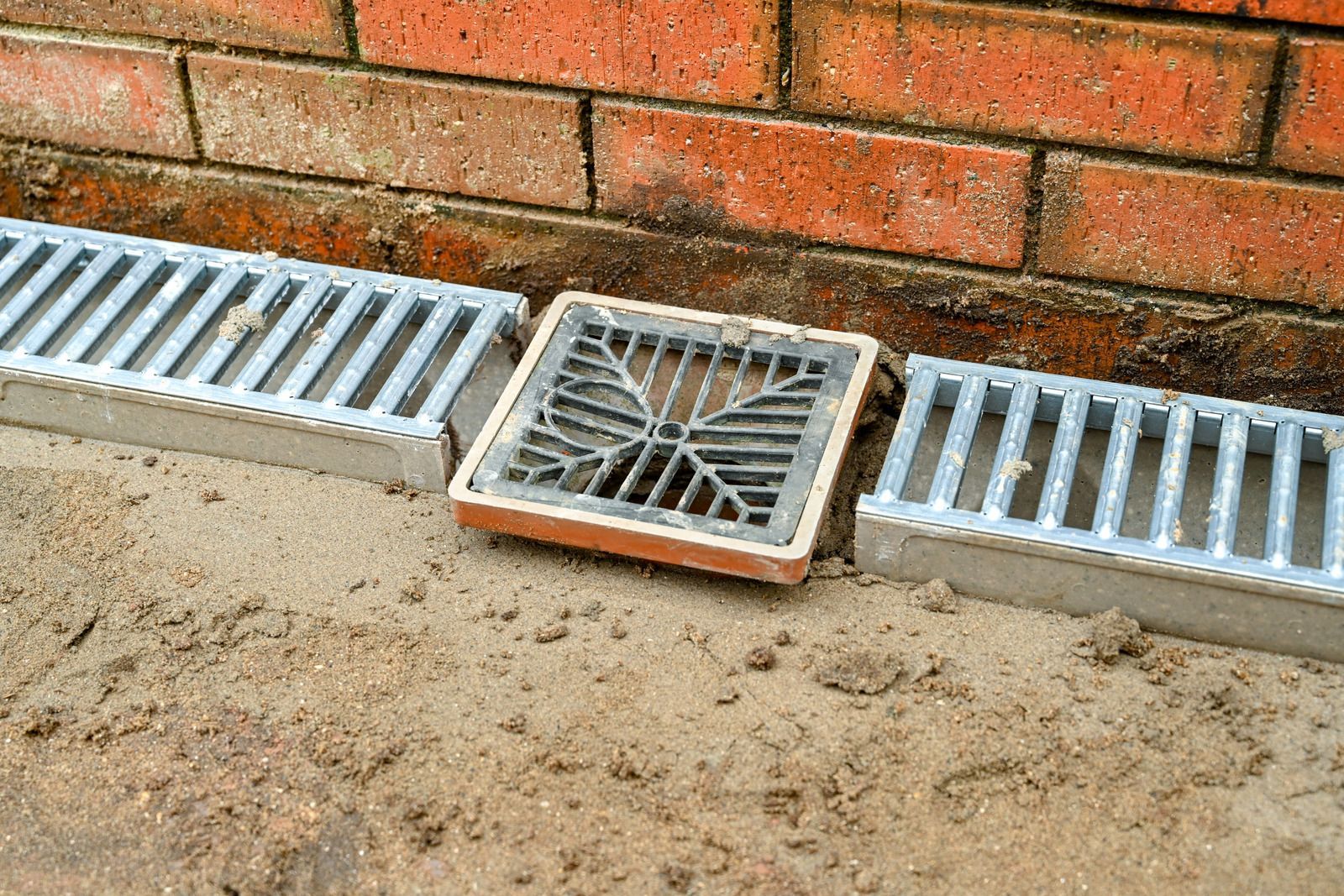
HARD EDGE
Surface and Channel Drains
Linear channel drains set across a driveway, garage opening, or patio catch sheet flow before it reaches a threshold. The grate and frame are set flush so nothing catches a tire, a stroller wheel, or a shoe.
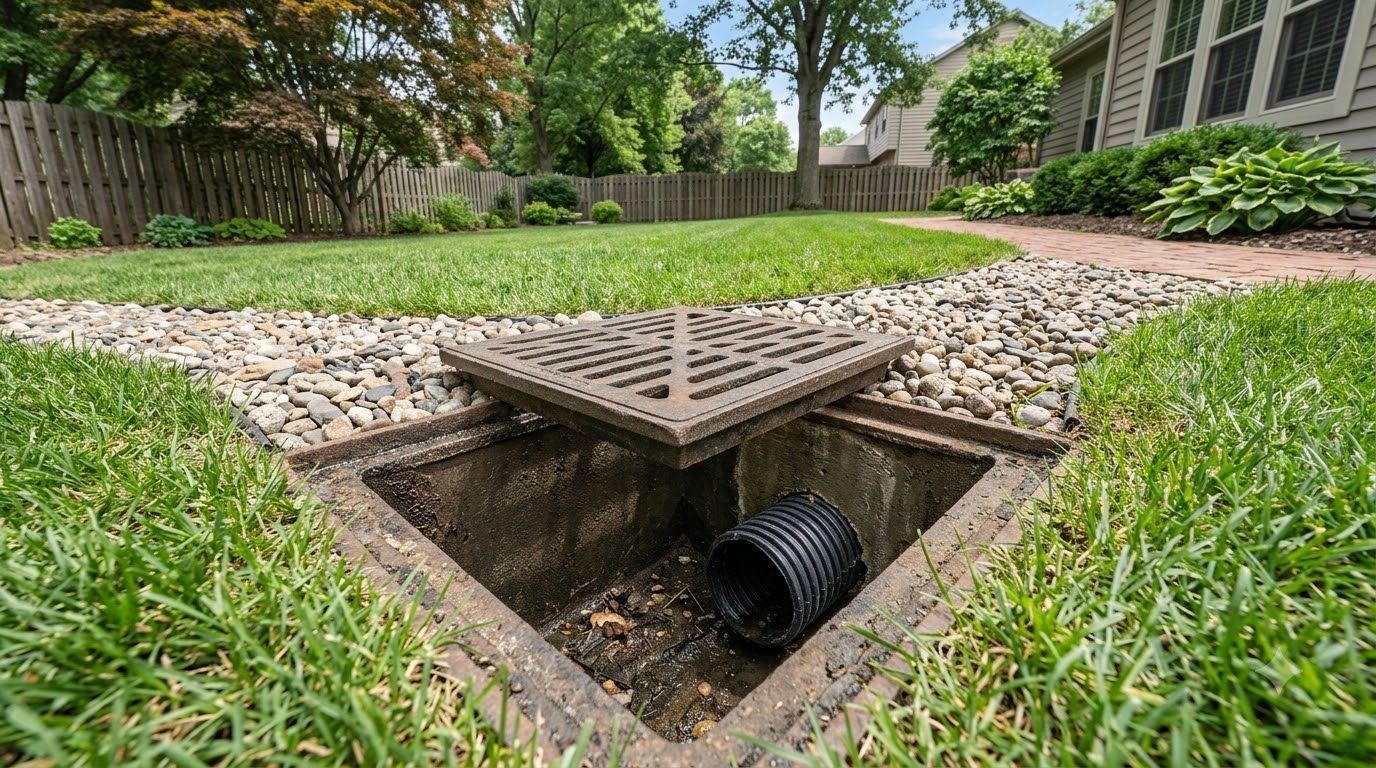
LOW POINT
Catch Basins and Area Drains
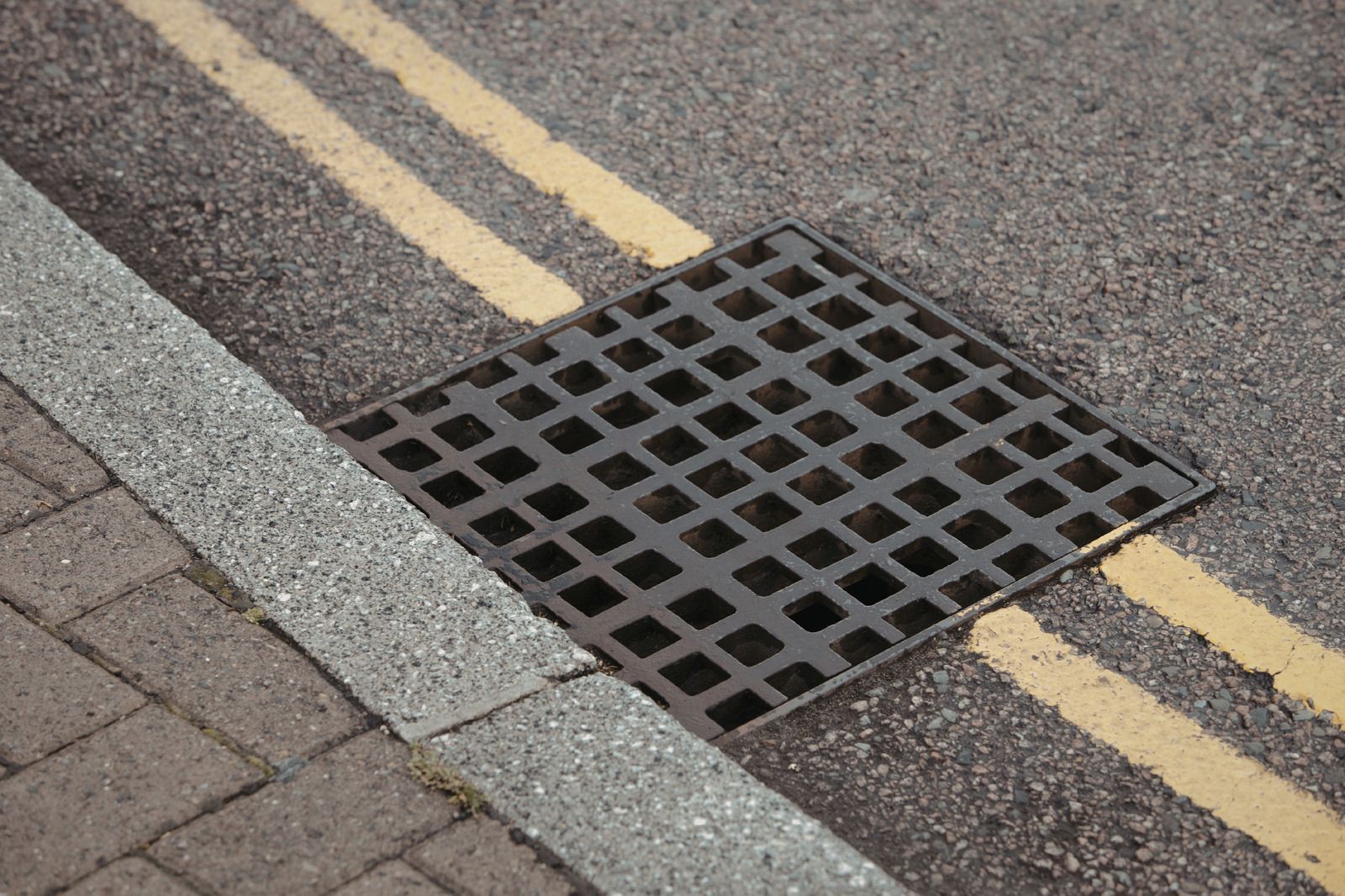
Basins collect water at the low spots a yard naturally creates, with sediment traps that keep debris out of the pipe. Grates are sized to the expected flow rather than to whatever the supply house had available.
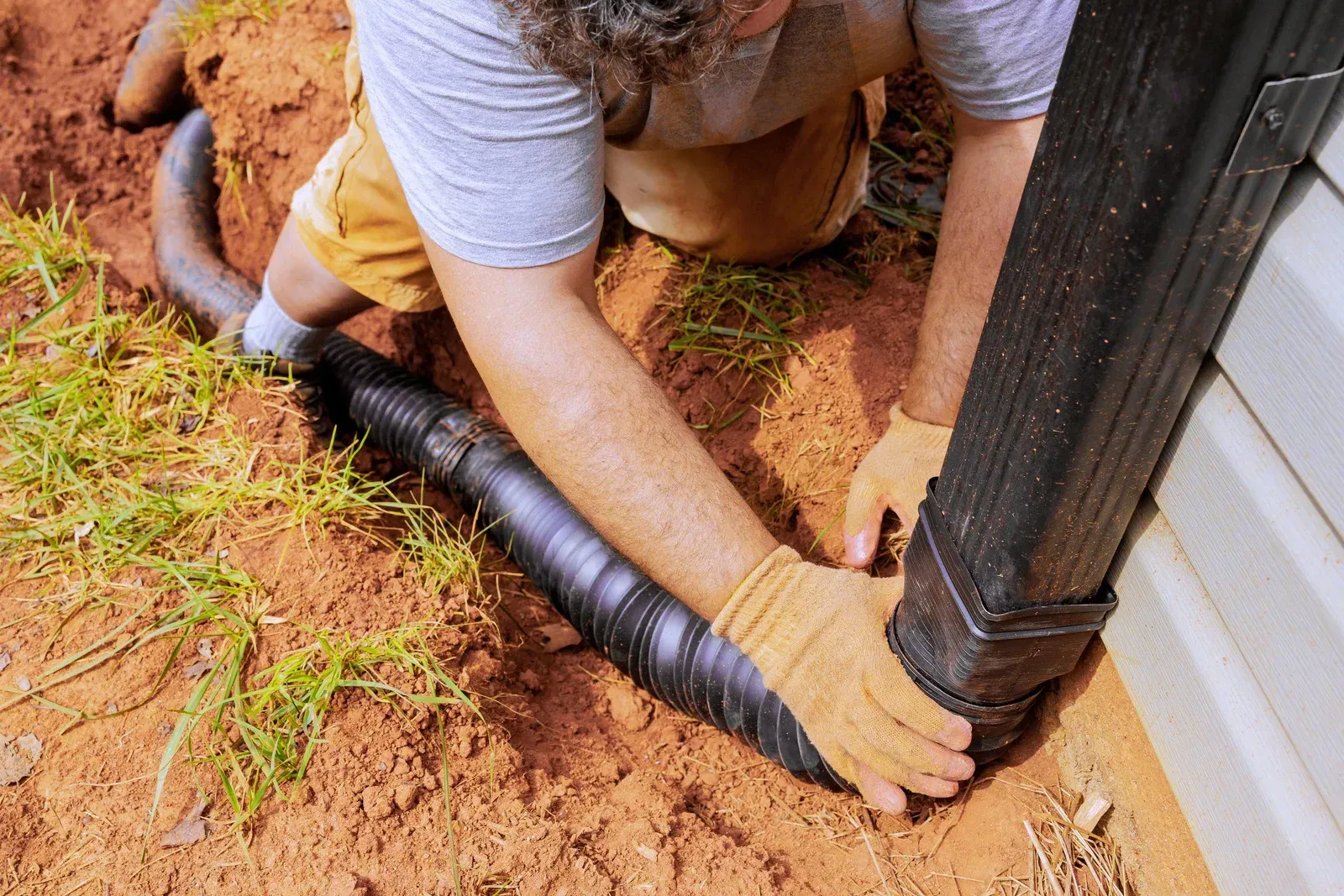
ROOF WATER
Downspout and Gutter Tie-Ins
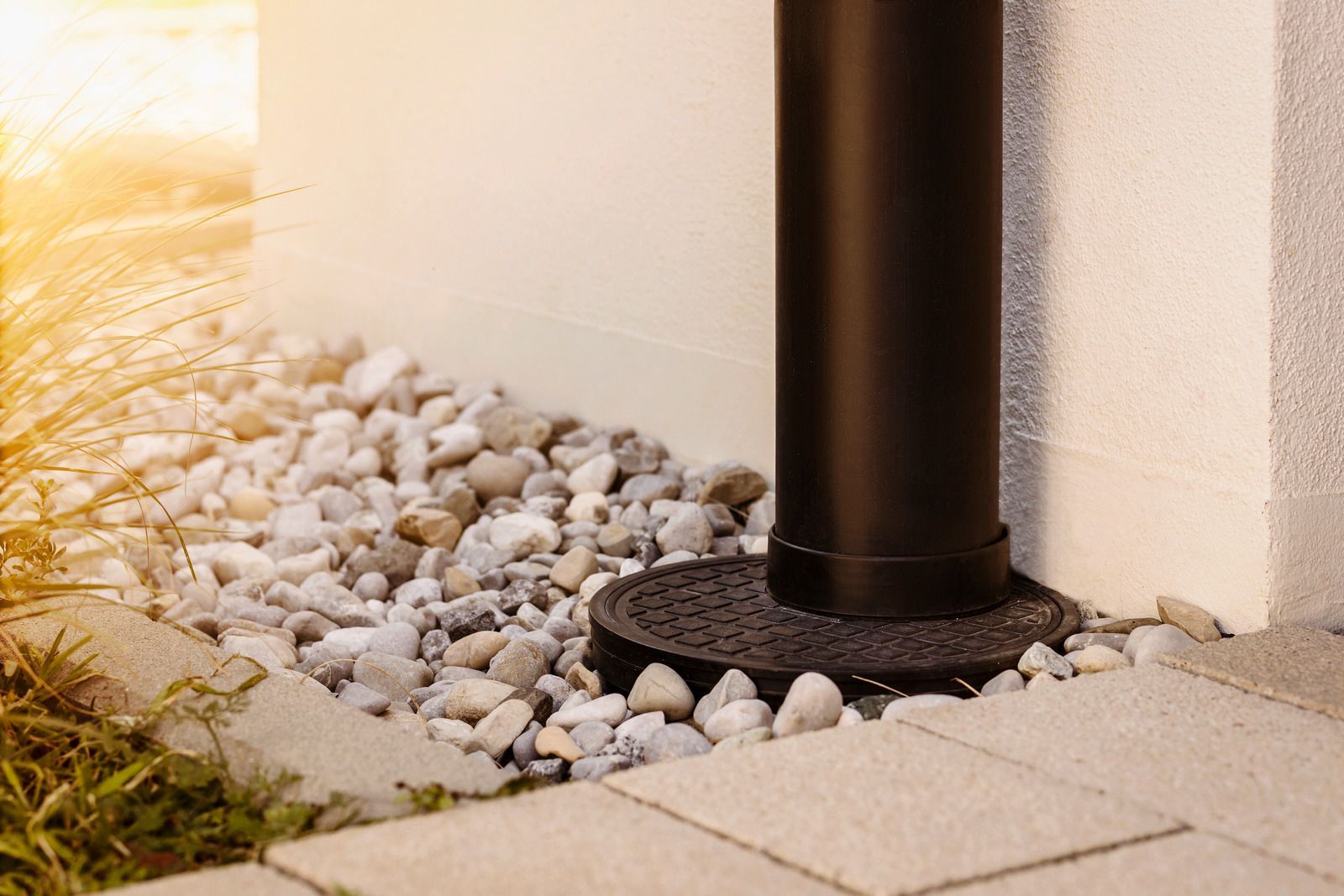
Roof runoff is the largest single volume most properties handle, and dumping it at the foundation is the most common mistake we find. We connect downspouts into solid pipe that discharges well away from the structure.
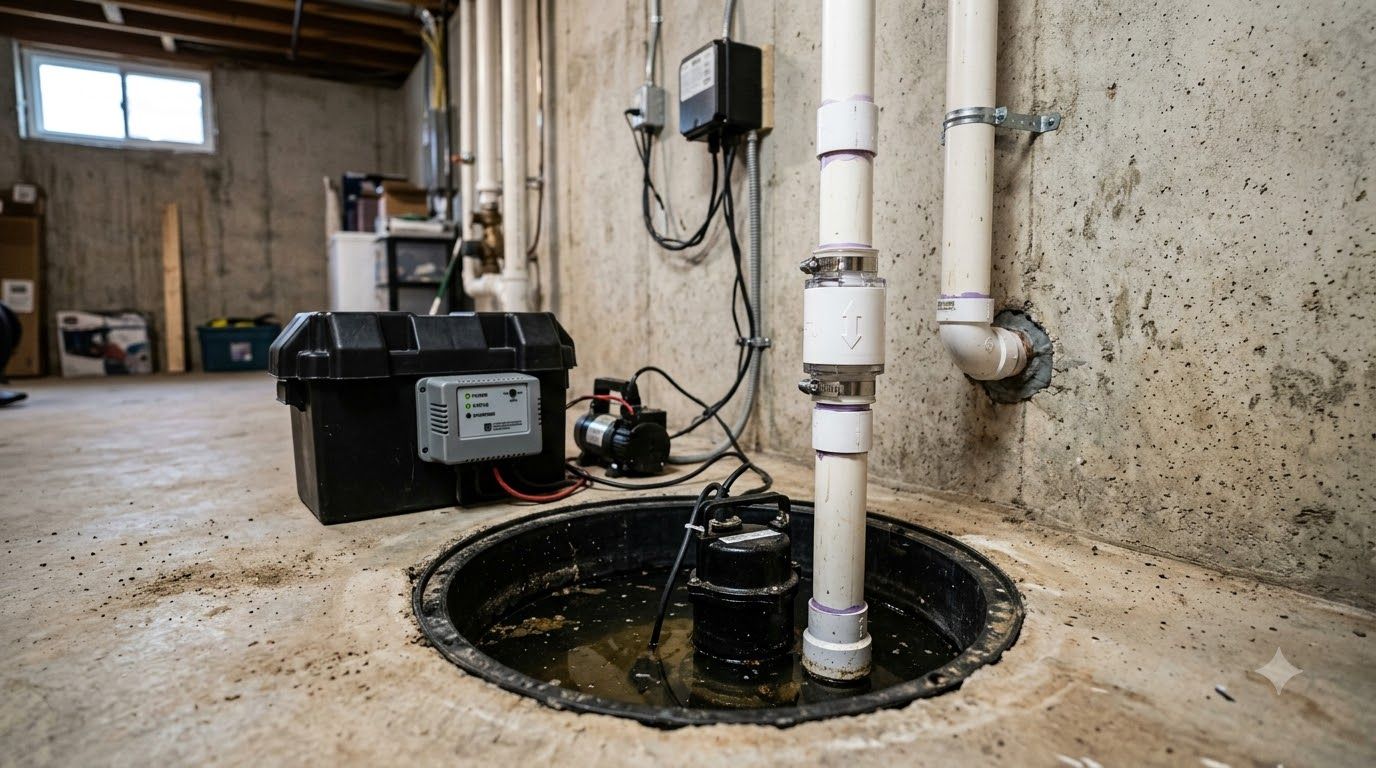
PUMP OUT
Sump Pump Systems
Where gravity discharge is impossible, a basin and pump lift water to a point where it can flow away. Sizing, check valves, discharge routing, and backup power all get considered so the system works during the storm.
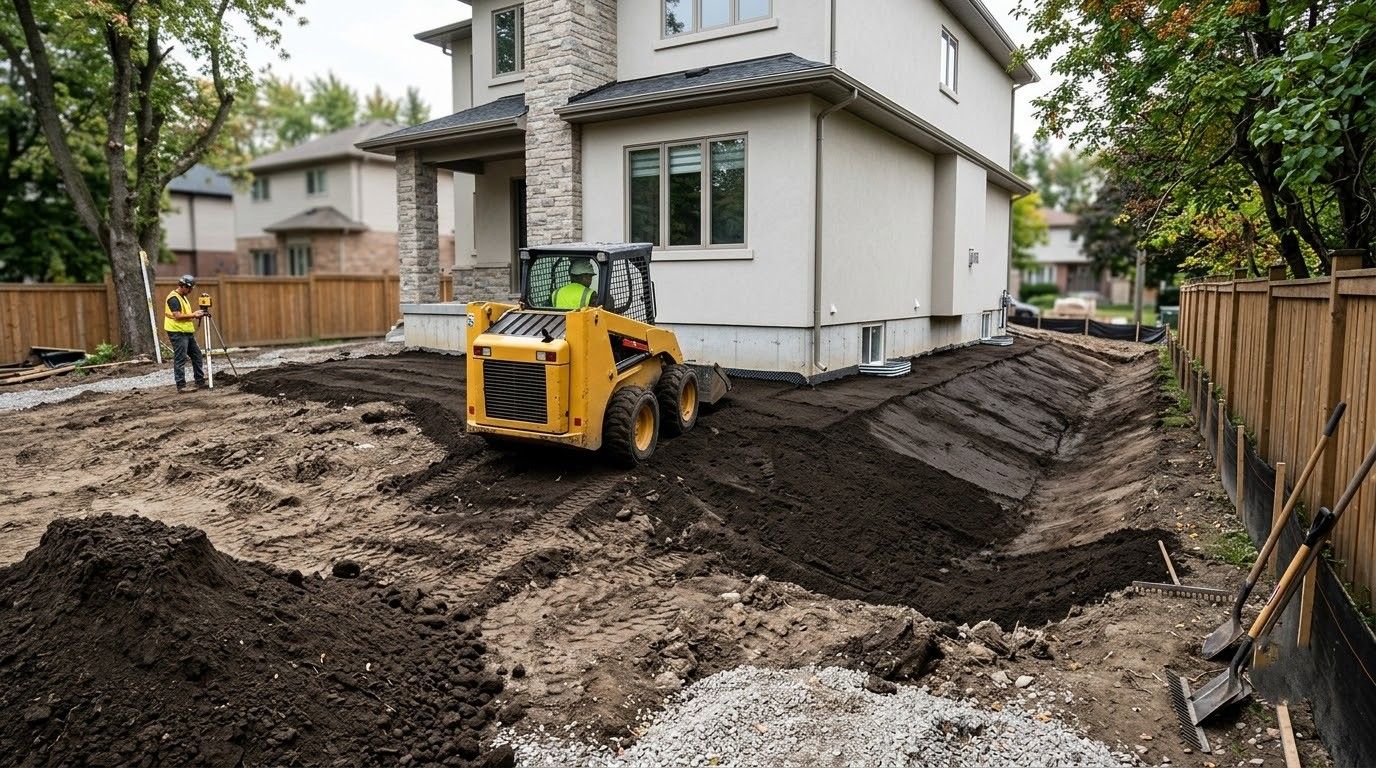
RESHAPE IT
Grading and Slope Correction
Sometimes the fix is soil rather than pipe. Reestablishing positive slope away from the structure, filling low spots, and shaping swales can solve a drainage complaint without a single foot of buried line.
THE WORD ON OUR WORK
WHAT OUR DRAINAGE CLIENTS SAY.
Drainage work is judged by what happens during the next storm. Property owners around Piedmont, Berkeley, and Oakland, CA describe side yards that finally dried out, garages that stayed clean through winter, and drainage problems they had quietly accepted as permanent simply ending for good.
Common Questions
frequently asked
questions.
Here are the drainage questions we hear most, covering system types, discharge options, maintenance, gravel selection, and how to tell whether a wet spot is a grading issue or a subsurface one.
How do I know if I need a French drain or just better grading?
Water sitting on the surface after rain usually points to grading. Ground that stays soft and springy between storms, or seepage appearing partway down a slope, indicates subsurface flow that a French drain is designed to intercept.
Where should a drainage system discharge?
Ideally to a lower point on your own property, a street gutter, or an approved storm connection. Discharging onto a neighbor's land creates liability, so Paradigm Concrete & Construction Inc confirms the legal option in Antioch, CA first.
Can drainage be installed under an existing driveway or patio?
Yes, usually by saw cutting a narrow channel, installing the line, and patching the concrete. A channel drain can also be cut into the surface, which is often the better answer at a garage or a low entry.
Why is water coming up through my slab?
Hydrostatic pressure beneath the slab pushes moisture through pores and cracks when groundwater rises. Perimeter drainage, corrected grading, and a functioning sump usually lower that water table enough to stop the intrusion at its source.
What size gravel is used in a French drain?
Clean, washed, angular rock, generally 3/4 inch to 1.5 inches, works well, because the voids between stones carry water freely. Fines and unwashed material clog the system and defeat the entire purpose.
How long does drainage work take to install?
A typical residential system takes 2 to 4 working days depending on trench length, access, and how much concrete has to be cut and replaced. Larger regrading projects and sump installations can run longer.
Why hire Paradigm Concrete & Construction Inc for drainage work?
Most drainage problems involve concrete somewhere, and we handle both trades ourselves. Owners in Antioch, CA appreciate that the trench, the pipe, and the slab patch are all done by one accountable crew.
LEARN MORE →
HOW WE WORK
FROM STANDING PUDDLE TO CLEAR OUTLET, HERE IS HOW.
STEP 01
WE WATCH WHERE WATER GOES
The best assessment happens during or right after rain, when the problem shows itself. Where that is not possible, we read stain lines, soil texture, moss growth, and elevation to reconstruct exactly what the water does.
STEP 02
WE MAP THE ROUTE
Collection points, pipe runs, and a legal discharge location get planned before anything is dug. Utilities are located, and we check that adequate fall exists along the entire route rather than only at the ends.
STEP 03
WE TRENCH TO SLOPE
Excavation follows a consistent grade toward the outlet, because a flat or reversed section will hold water and silt. Depth is set by the water we are intercepting rather than by whatever is convenient to dig.
STEP 04
WE BED THE PIPE
Filter fabric lines the trench, clean drain rock supports the perforated pipe, and more rock covers it before the fabric wraps closed. That envelope is what keeps soil fines out and the system flowing for years.
STEP 05
WE TIE IN THE INLETS
Catch basins, channel drains, and downspout connections join the main line with proper fittings and consistent fall. Grates and frames are set flush to the finished surface so nothing becomes a trip hazard afterward.
STEP 06
WE TEST THE FLOW
Before backfilling completely, we run water through the system and confirm it reaches the outlet at a reasonable rate. Then trenches are closed, surfaces restored, and any concrete cut for access is patched cleanly.
Request Free Estimate
Get Your Quote
Accepting Inquiries
Contact Us
We will get back to you as soon as possible.
Please try again later.
Get Your Free Estimate
SHOW US WHERE IT PUDDLES, AND THE ASSESSMENT IS FREE.
Send photos of the wet area, ideally taken during rain, through our contact page. We will walk the property, work out where the water comes from, and return a written scope within 2 business days.
WHAT YOUR DRAINAGE ESTIMATE COVERS:
✓ Source of the water identified, not just the symptom
✓ System type, pipe size, and trench depth specified
✓ Discharge point confirmed as legal and adequate
✓ Basins, grates, and fittings listed individually
✓ Concrete cutting, patching, and surface restoration included
✓ Grading corrections identified alongside buried work