
Driveways
CONCRETE DRIVEWAYS IN Piedmont, Berkeley, and Oakland, CA.
Your driveway takes more abuse than any other surface on the property, every day. Paradigm Concrete & Construction Inc builds concrete driveways across Piedmont, Berkeley, and Oakland, CA, Contra Costa County, and Alameda County, on compacted base with thickness matched to your vehicles. A 1-year paving warranty and 60+ years of combined experience stand behind it. Estimates come back through our contact page.
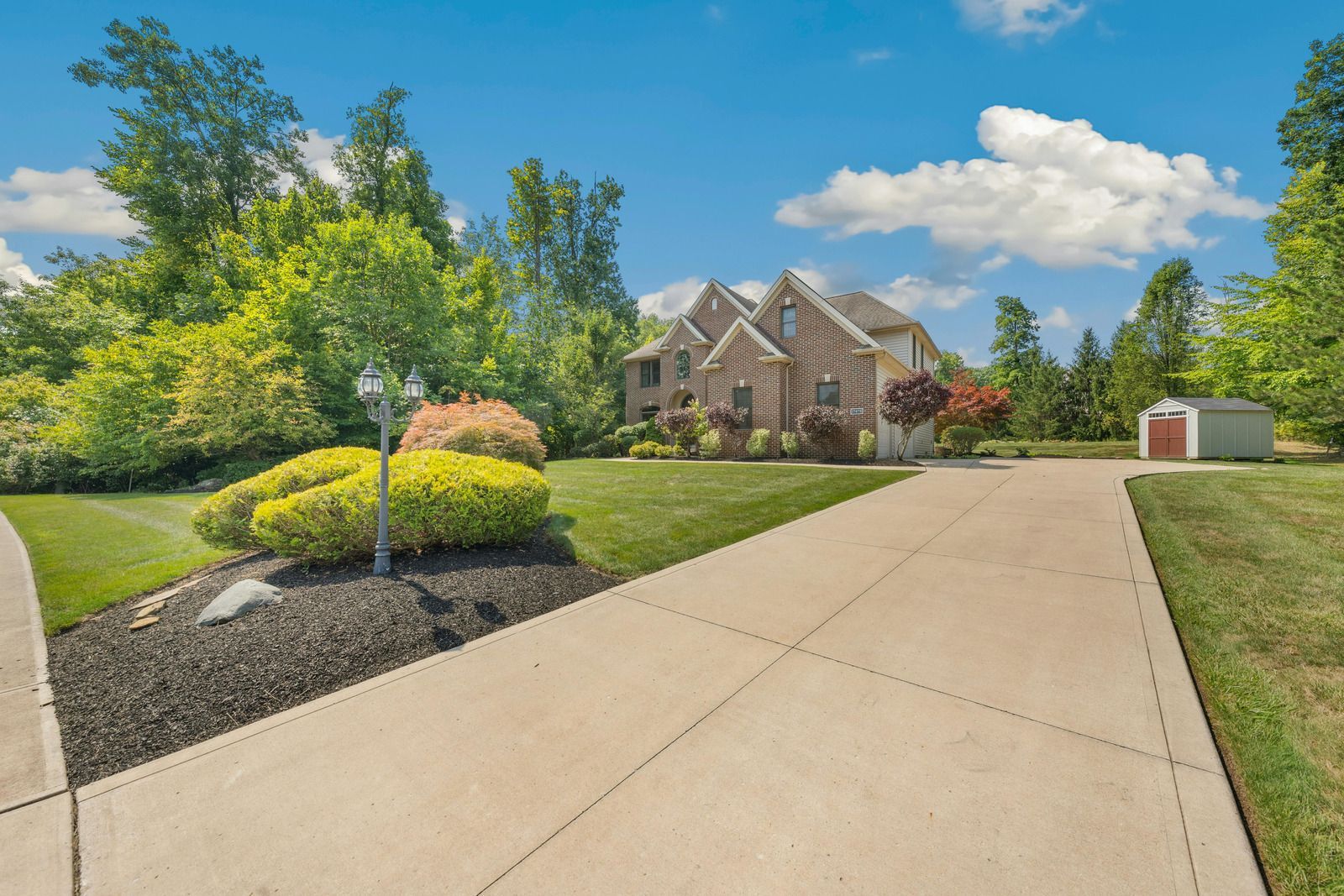
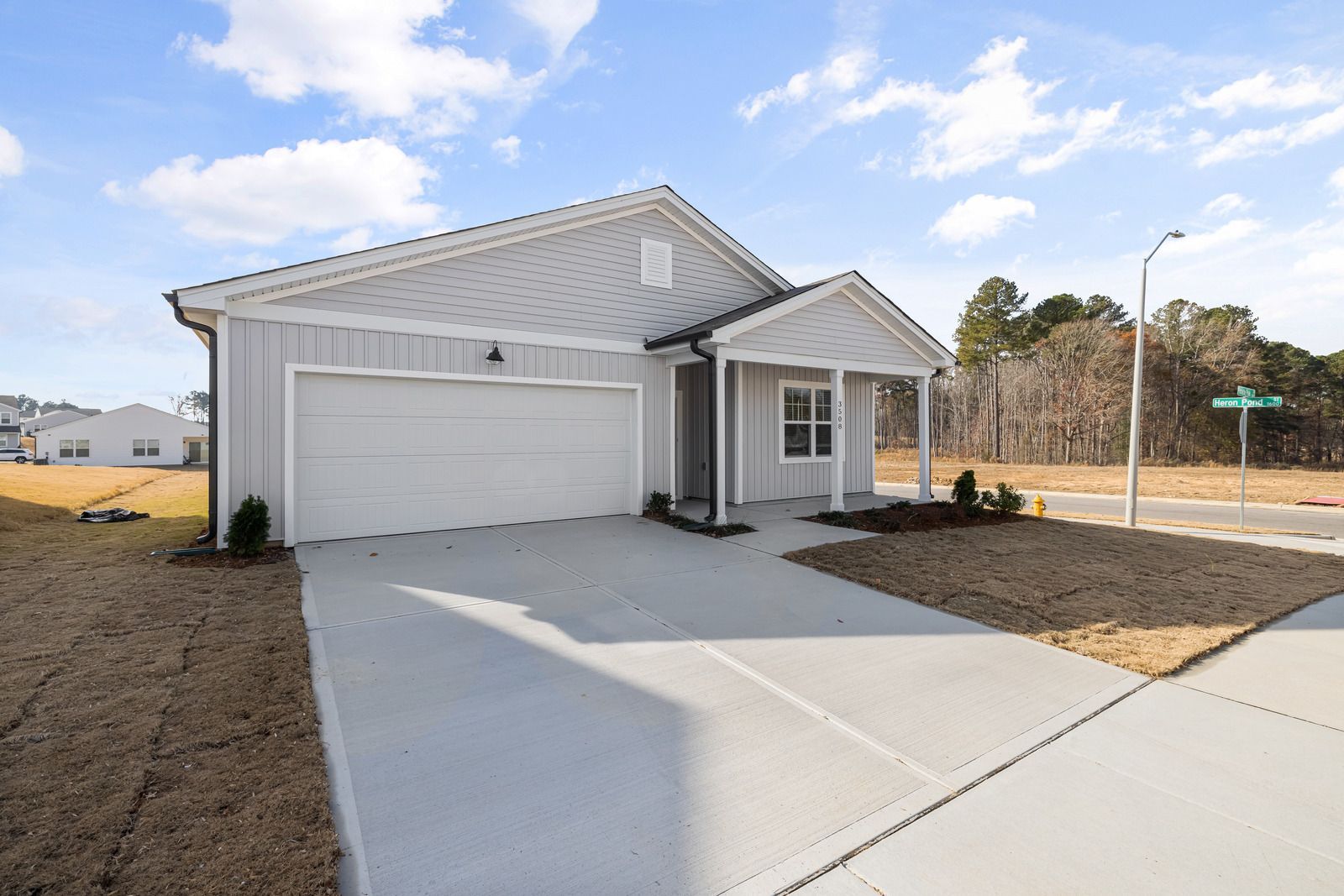
THIN SLABS AND SOFT GROUND BREAK TOGETHER.
Look at any driveway that spidered apart in under 10 years and you will usually find two causes stacked on each other: concrete poured too thin for the vehicles using it, and a base that was never compacted properly. One would have been survivable. Together they guarantee a replacement long before the finish ever wears out.
So we always start underneath. Existing material comes out, the subgrade gets scarified and recompacted, and base rock goes down in carefully measured lifts until a plate compactor stops sinking into it anywhere.
- 4 inch standard slabs, thicker where loads demand
- Rebar or mesh tied and chaired, never laid flat
- Joint spacing planned to the slab thickness
- 1-year warranty available on paving work
CONCRETE DRIVEWAYS
THE FIRST THING ANYONE SEES, AND THE LAST TO GET FIXED.
A driveway sets the tone for the entire front of a house, yet it is usually the last thing owners budget for. That is understandable, because replacing one is disruptive and nobody enjoys parking on the street for a week. The upside is that a properly built driveway then disappears from your list of worries for the next 30 years. We work in phases where we can, so access is never gone longer than necessary.
ANTIOCH DRIVEWAYS FIGHT HEAT, CLAY, AND WEIGHT.
Summer temperatures out here push surface curing faster than crews expect, and the clay underneath swells and shrinks with the seasons. Add a boat, a work truck, or an RV to the equation and a standard residential slab is simply undersized. We ask what actually parks there before deciding thickness, reinforcement, and where the joints fall across the approach and the apron at the street.
DIAMOND CERTIFIED SINCE 2008, AND STILL EARNING IT.
Independent rating bodies do not hand out Highest Quality marks for marketing. Diamond Certified surveys real customers, and we have held that rating since 2008 while also maintaining Better Business Bureau membership. Behind those credentials sit 60+ years of combined field experience across residential and commercial paving. That is the difference between a crew that has seen every failure mode and one still learning on yours. Which would you rather have at your house?
WHAT A DRIVEWAY BUILT RIGHT RETURNS TO YOU
CURB APPEAL THAT LASTS
The approach is the widest thing a visitor sees before your front door. Clean edges, consistent color, and joint lines that follow the geometry of the house make the whole property read as cared for rather than patched together over time.
PARKING WITHOUT WORRY
Guests park where they like, deliveries pull all the way in, and a trailer can sit for a weekend without leaving a depression. Capacity designed for the heaviest thing you own removes a daily calculation from your life.
WATER THAT LEAVES THE SURFACE
A properly pitched slab sheds rain toward the street or a drain instead of holding puddles against the garage. Dry surfaces stay cleaner, resist staining, and stop feeding moisture into the compacted base material underneath them every winter.
FEWER REPAIRS OVER TIME
Patching a failing driveway becomes an annual ritual that never quite finishes. Building it correctly once converts that recurring cost and hassle into a single planned project you can budget for once and then stop thinking about entirely.
SAFER FOOTING IN WET WEATHER
A broom or exposed aggregate texture keeps shoes and tires from sliding on a slope after rain. That traction matters most at the steepest part of the approach, which is exactly where most people tend to lose their footing.
A CLEANER TRANSITION TO THE STREET
The apron where private concrete meets public pavement is where sloppy work shows first. Matching elevation and jointing at that seam keeps the edge from cracking and keeps the city from taking an unwelcome interest in it later.
WHAT WE PAVE
OUR DRIVEWAY WORK.
Whether the existing surface is failing or the ground is still bare, one of these six approaches will fit. We will tell you honestly which one your particular situation actually calls for.
NEW BUILDS
New Driveway Installation
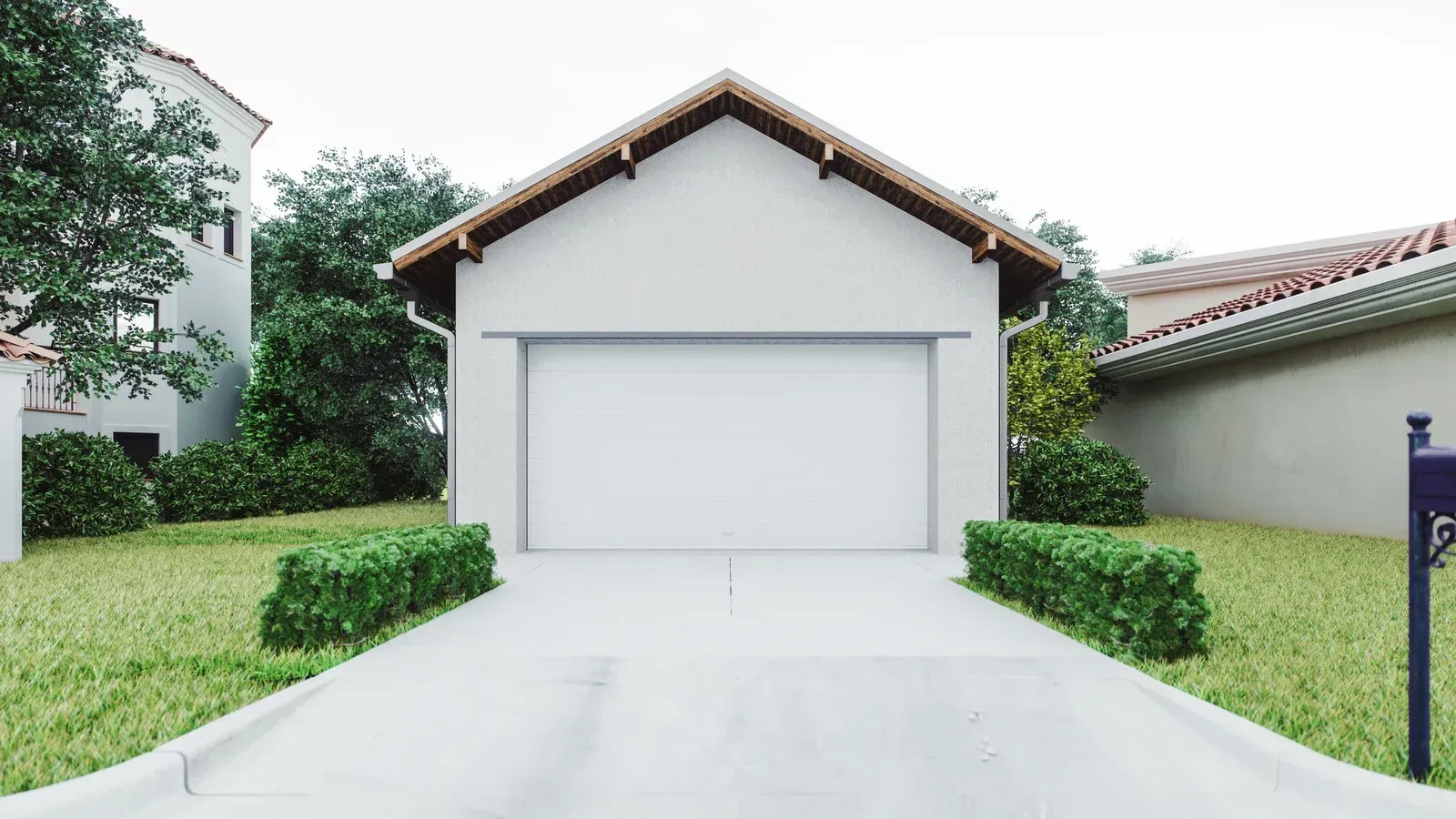
Bare ground becomes a finished approach through excavation, base rock, compaction, forming, reinforcement, and a single continuous pour. We set elevations so the surface drains toward the street and meets the garage threshold without a lip or a puddle.
FULL SWAP
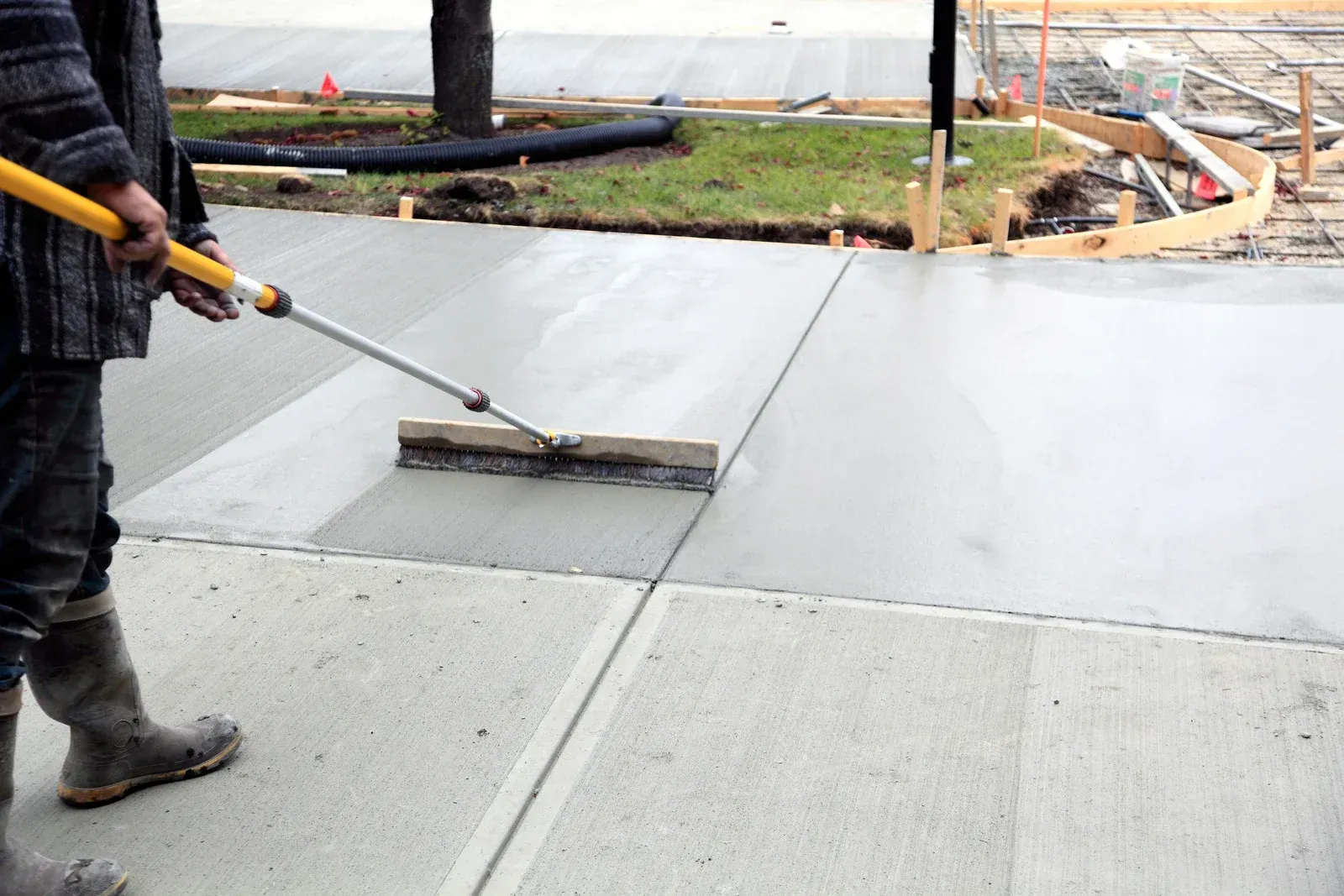
Driveway Replacement
Failed slabs get saw-cut, broken out, and hauled away, then the exposed subgrade is inspected before anything new goes down. Rebuilding is the only moment you can fix the base problem that quietly destroyed the original surface.
PATTERN POUR
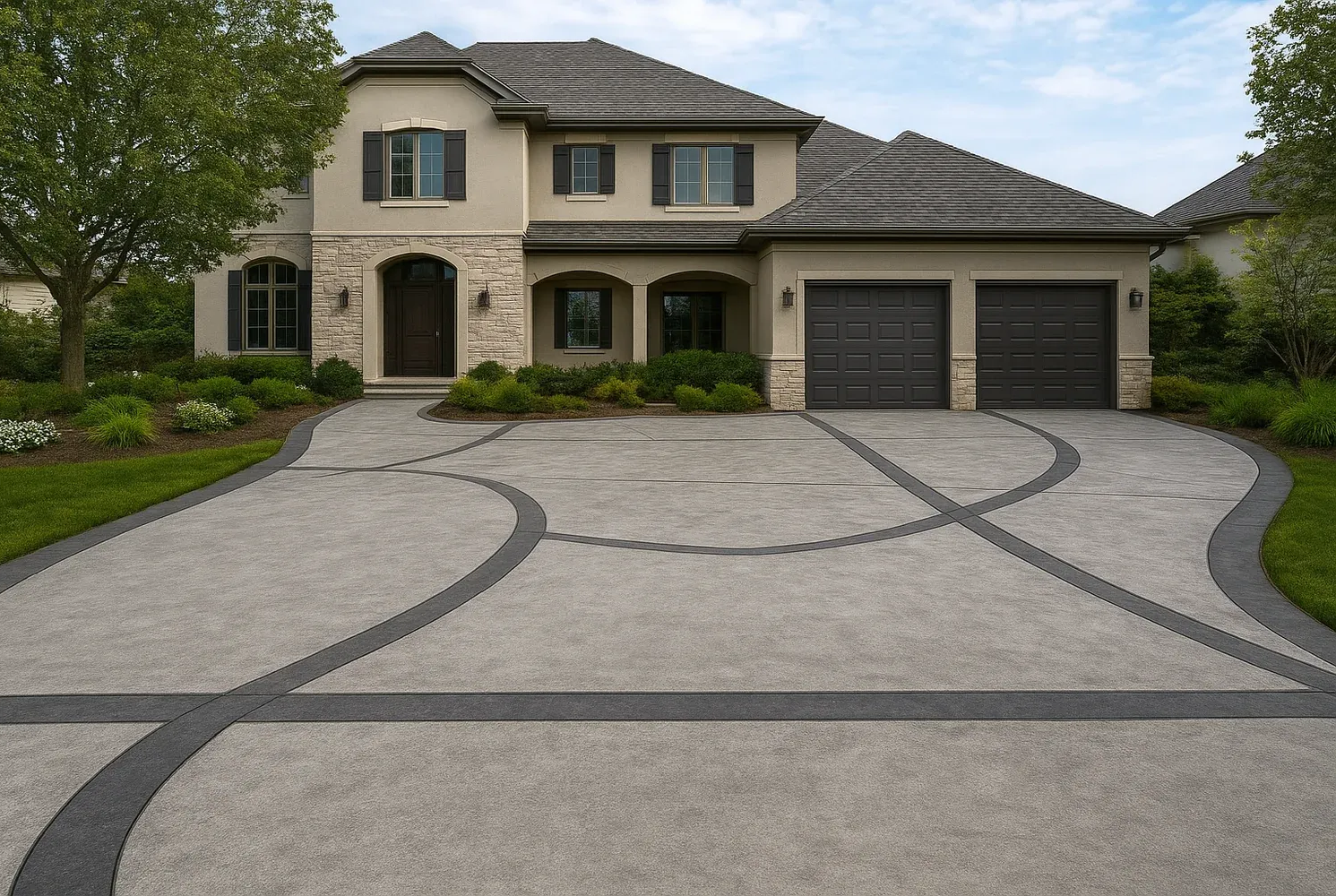
Decorative Driveway Finishes
Stamped patterns, integral color, borders, and exposed aggregate fields all work on a driveway when the layout is planned first. Bands and saw-cut patterns can also break up a large expanse without weakening the slab at all.
STREET EDGE
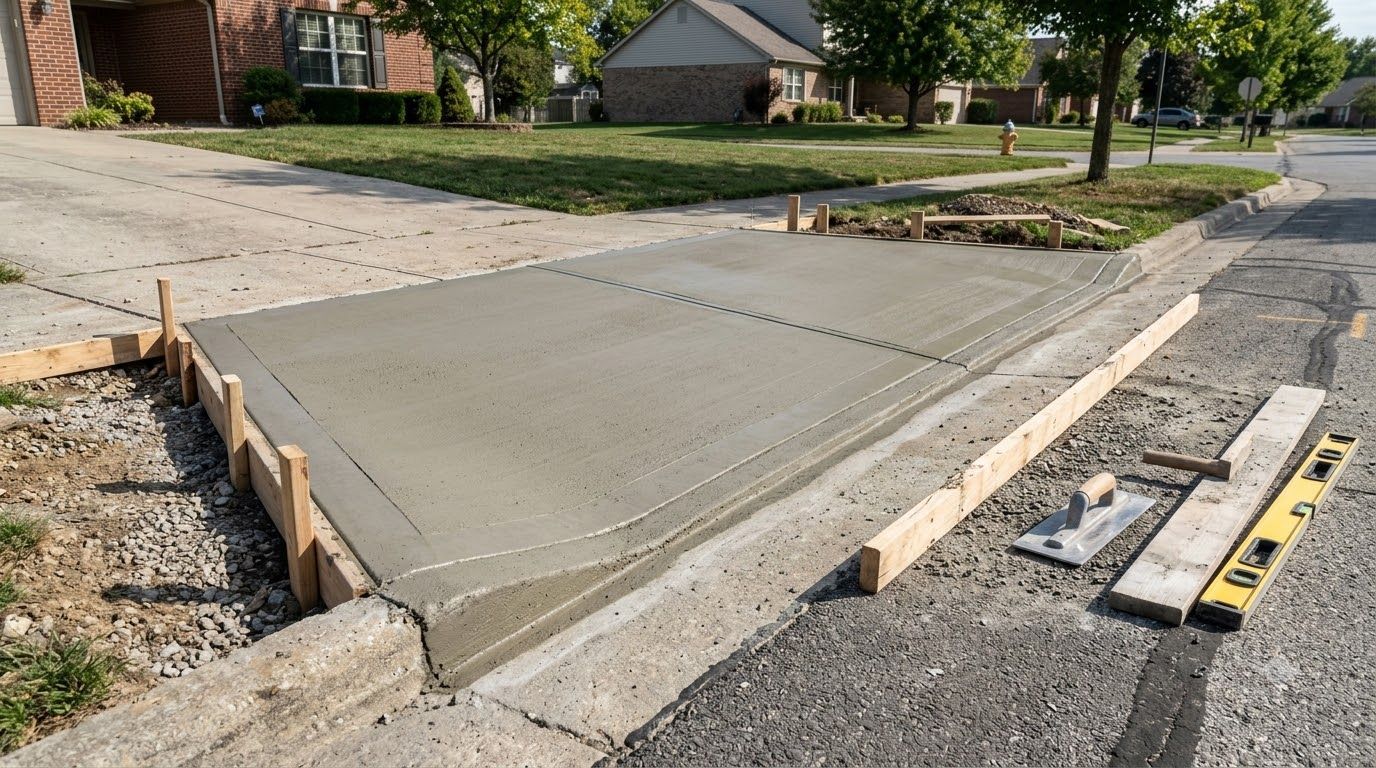
Driveway Aprons and Approaches
The section between sidewalk and street carries the heaviest wheel loads and often falls under city specification. We build aprons to the required thickness and elevation so the transition stays flush and passes inspection the first time around.
EXTRA ROOM
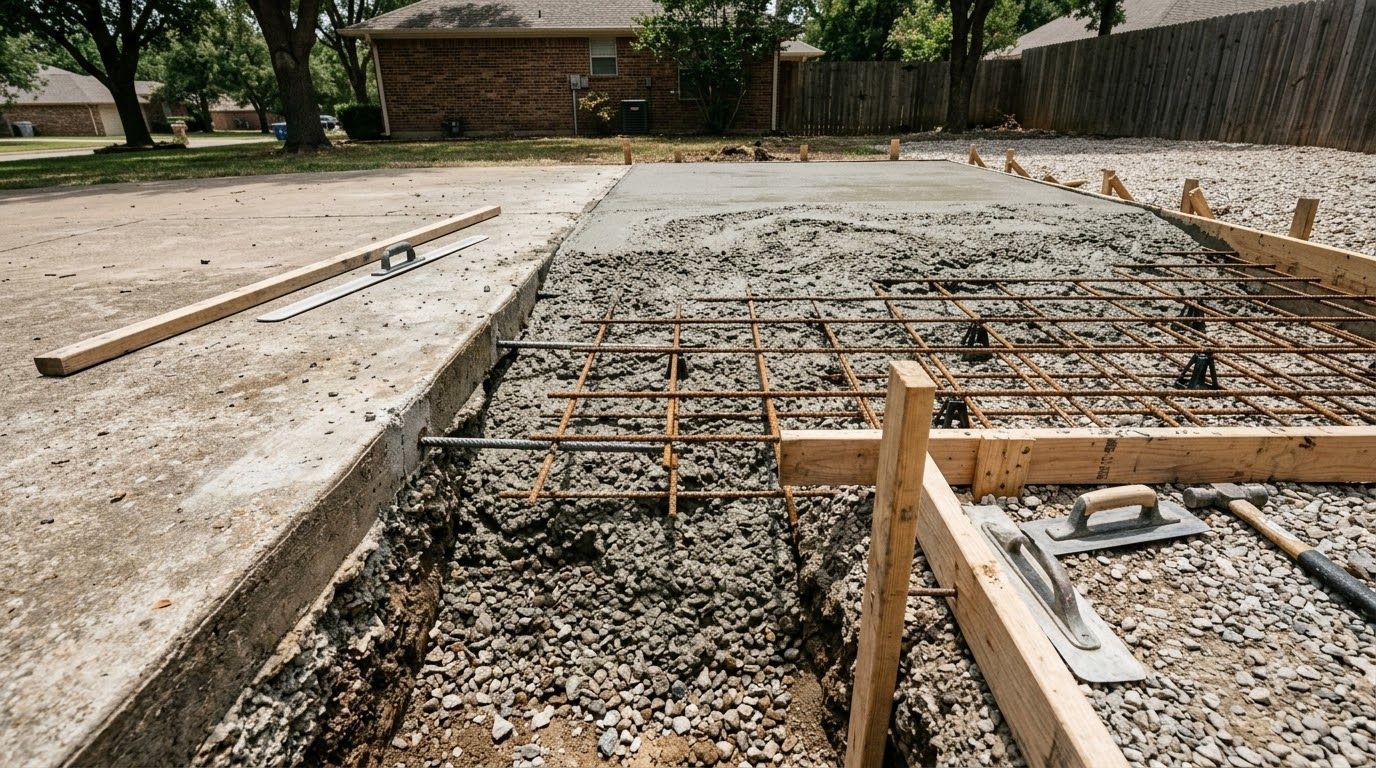
RV and Parking Pads
Extra parking demands more than an extension of the existing slab. Heavier vehicles need deeper base, thicker concrete, and stronger reinforcement, and we tie the new pad into the old surface so the joint does not simply open.
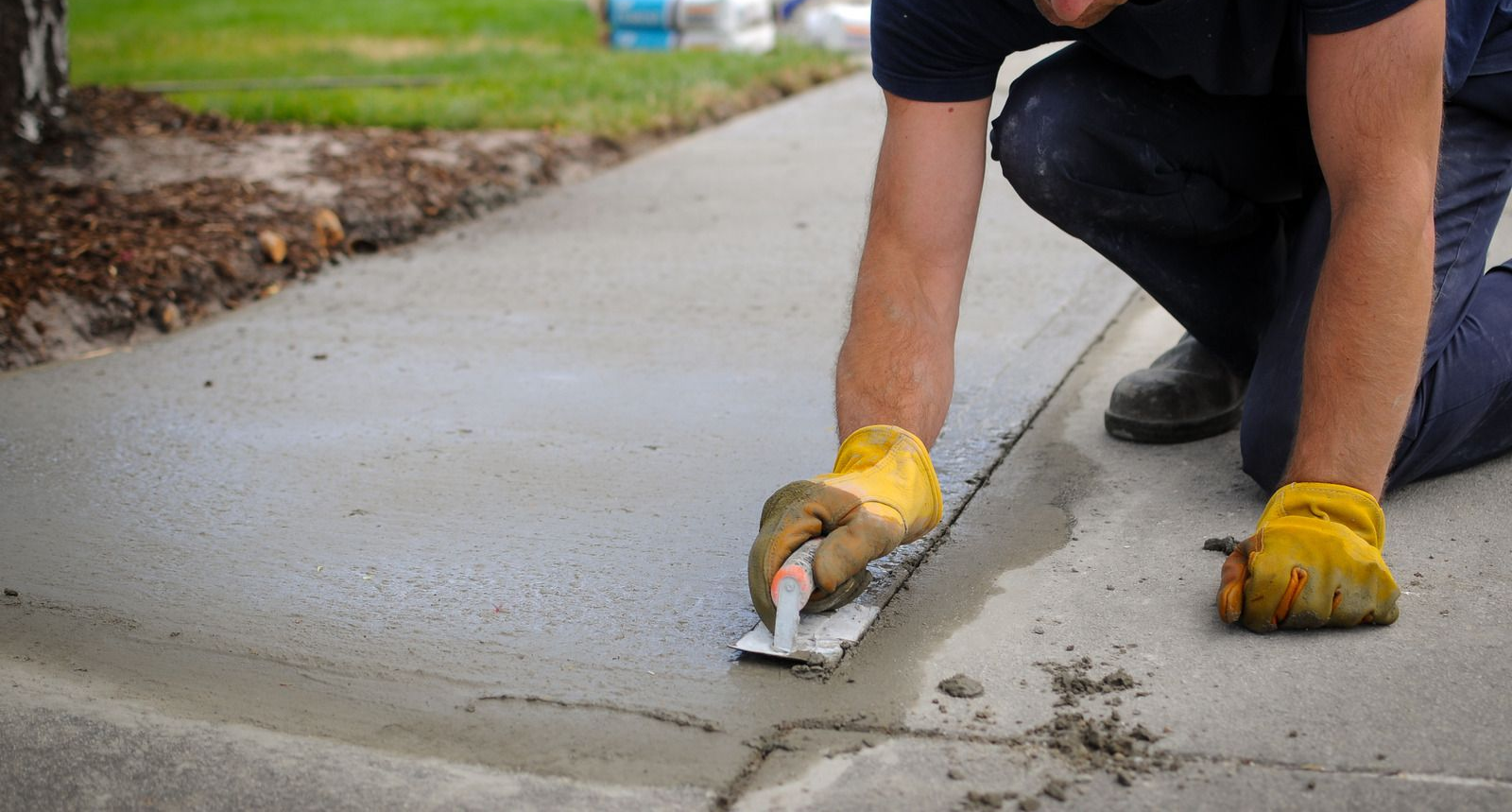
CRACK CONTROL
Driveway Repair and Joint Work
Settled panels, spalled edges, and failed joint sealant can often be corrected without replacing the whole surface. Routing and resealing joints keeps water out of the base, which is usually what starts the larger failure in the first place.
Duis aute irure dolor in reprehenderit in voluptate velit esse cillum dolore eu fugiat nulla pariatur. Excepteur sint occaecat cupidatat non proident, sunt in culpa qui officia deserunt mollit anim id est laborum.
Lorem ipsum dolor sit amet
★★★★★
Mike T.
THE WORD ON OUR WORK
WHAT OUR DRIVEWAY CLIENTS SAY.
A driveway is a visible, disruptive project, so people remember exactly how it went. Reviews from homeowners around Piedmont, Berkeley, and Oakland, CA describe the demolition, the schedule we held, and how the finished approach looked once the barricades came down and normal parking resumed.
Common Questions
frequently asked
questions.
These are the driveway questions we field most often, covering width, jointing, slope, staining, and what actually happens to a slab in the first year after the pour.
How wide should a residential driveway be?
Single car driveways commonly run 10 to 12 feet wide, while double widths land between 18 and 24 feet. We usually recommend adding a foot beyond the minimum so car doors open without anyone stepping into the landscaping.
Do driveways need expansion joints as well as control joints?
Control joints handle shrinkage within the slab, while expansion joints isolate the driveway from fixed structures such as the garage slab, a sidewalk, or a foundation wall. Most residential driveways need both of them, placed at different locations.
Is concrete or asphalt the better choice for a driveway?
Concrete typically lasts far longer, handles summer heat without softening, and needs no resealing every few years. Asphalt installs faster and is easier to patch, though it demands ongoing maintenance and shows wear sooner under heavy vehicles and trailers.
Why is my driveway sinking near the garage?
Backfill around a foundation settles for years, and a slab poured over it drops with it. Paradigm Concrete & Construction Inc corrects that in Antioch, CA by removing the panel, recompacting the fill, and repouring at the correct elevation.
How do I remove oil stains from a concrete driveway?
Fresh spills lift with an absorbent powder such as cat litter, then a degreaser and stiff brush. Older stains usually need a poultice or an alkaline cleaner, and a sealed surface releases them far more easily than bare concrete.
Does a driveway need a slope, and how much?
Yes. A driveway should fall roughly 1 to 2 percent, or about 1/4 inch per foot, away from the garage. Less than that and water sits; much more and vehicles start scraping at the transitions and aprons.
Will tree roots damage a concrete driveway?
Yes, given enough time. Roots follow moisture under a slab and lift panels as they thicken. Root barriers, generous base depth, and thoughtful joint placement all reduce the damage, though relocating a young tree is far more reliable.
Why should I choose Paradigm Concrete & Construction Inc for my driveway?
Our crews handle demolition, base work, forming, pouring, and finishing without subcontracting any stage. Homeowners across Antioch, CA choose us because one team owns the outcome, and a 1-year warranty is available on all the paving we install.
LEARN MORE →
HOW WE WORK
FROM DEMOLITION TO THE FIRST PARKED CAR, HERE IS HOW.
STEP 01
WE MEASURE THE APPROACH
Width, length, slope, and the elevation at both the garage and the street all get recorded. We note what parks there, where water currently runs, and whether the apron falls under a city specification we need to match.
STEP 02
WE PLAN THE PANELS
Joint layout is drawn before anything is ordered, because panel size and shape control where cracking appears. Decorative bands, borders, and finish changes are agreed at this stage rather than improvised on the morning of the pour.
STEP 03
WE DEMOLISH THE OLD SLAB
Saw cuts give clean edges at the property line and the garage, then the old surface breaks out and leaves the site. Existing utilities and irrigation lines are located first so nothing gets cut by accident.
STEP 04
WE COMPACT AND FORM
Subgrade is graded, moisture conditioned, and compacted until it holds. Base rock follows in lifts, forms are set to the drainage plan, and reinforcement is tied and chaired so the steel sits inside the slab rather than under it.
STEP 05
WE PLACE THE POUR
Concrete arrives on a schedule that keeps trucks moving, and the crew screeds, floats, and edges continuously. The finish texture goes on once bleed water has left, which is a timing judgment rather than a fixed clock reading.
STEP 06
WE CUT THE JOINTS
Control joints are saw cut at the right window, usually within the first day, at a spacing suited to the thickness. Curing follows, forms come out, the site gets swept, and we walk the finished driveway with you.
Request Free Estimate
Get Your Quote
Accepting Inquiries
Contact Us
We will get back to you as soon as possible.
Please try again later.
Get Your Free Estimate
SEND US THE APPROACH, AND THE MEASURE UP IS FREE.
Photograph the driveway, tell us what parks on it, and send both through our contact page. We come out, take real measurements, and return a written scope within 2 business days with no obligation attached.
WHAT YOUR DRIVEWAY ESTIMATE COVERS:
✓ Slab thickness matched to the vehicles you actually own
✓ Base rock depth and compaction specified in writing
✓ Joint layout drawn before any concrete is ordered
✓ Demolition, haul away, and utility locating included
✓ Apron and city requirements confirmed in advance
✓ A 1-year warranty available on paving work